Prebiotics vs. Probiotics: What's the Difference and Why You Need Both
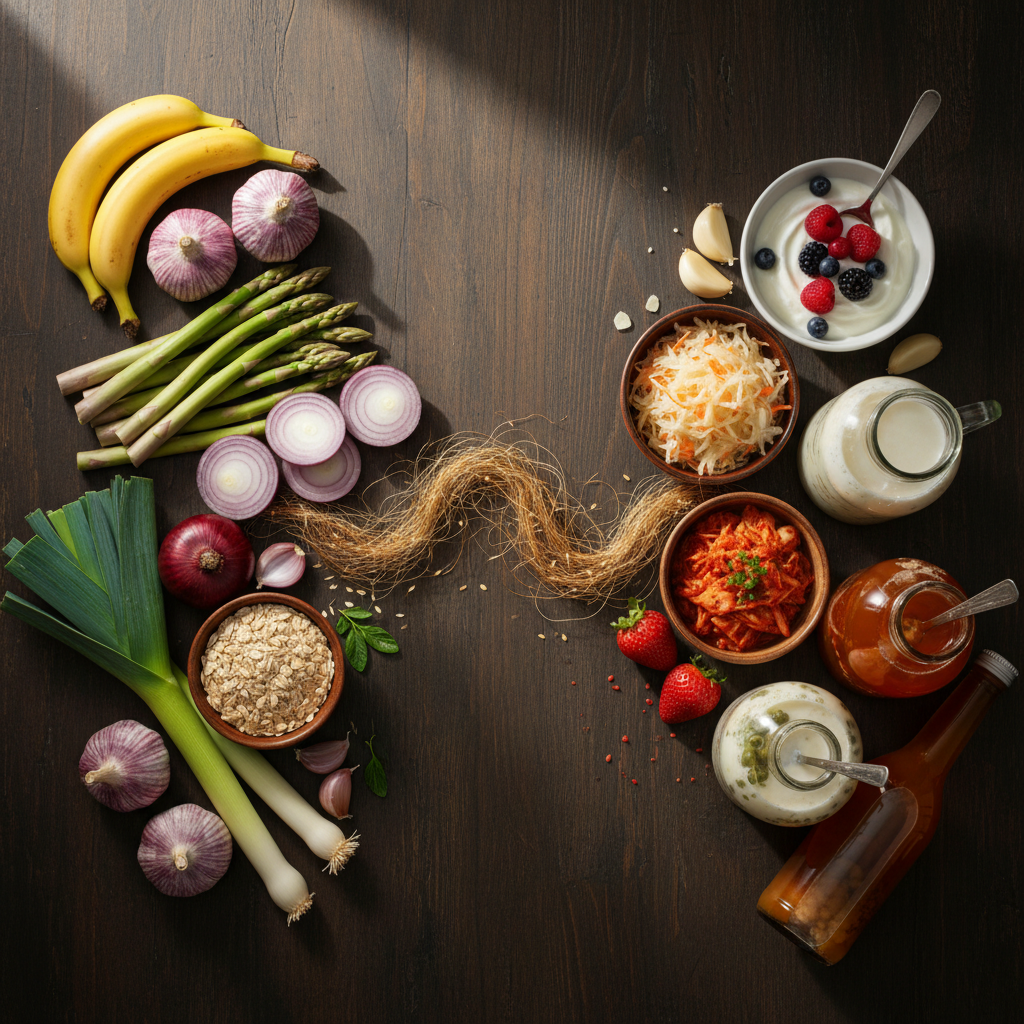
The Missing Half of the Gut Health Equation
Most people interested in gut health have heard of probiotics — the beneficial live bacteria found in yogurt, supplements, and fermented foods. But there's an equally important player that rarely gets the attention it deserves: prebiotics. If probiotics are the soldiers defending your gut, prebiotics are the food supply that keeps them strong, active, and multiplying.
Understanding the difference between these two — and why your gut needs both — could be the key to finally achieving the digestive health you've been working toward. Research suggests that taking probiotics without prebiotics is like planting seeds in soil with no nutrients: they may survive, but they'll never truly thrive.
Probiotics vs. Prebiotics: Clear Definitions
What Are Probiotics?
Probiotics are live microorganisms — primarily bacteria and some yeasts — that provide health benefits when consumed in adequate amounts. They're found naturally in fermented foods like yogurt, kefir, sauerkraut, kimchi, and kombucha. You can also take them as supplements in capsule, powder, or liquid form.
The most common probiotic strains belong to the Lactobacillus and Bifidobacterium families. Each strain performs slightly different functions — some help with digestion, others support immune function, and certain strains may even influence mood and mental health through the gut-brain axis.
What Are Prebiotics?
Prebiotics are specialized plant fibers that your body cannot digest. Instead of being broken down for energy, these fibers travel intact to your lower digestive tract, where they serve as food for your beneficial gut bacteria. Think of them as fertilizer for the good bacteria already living in your gut.
The most well-studied prebiotics include fructooligosaccharides (FOS), galactooligosaccharides (GOS), and inulin — all types of soluble fiber found naturally in many plant foods. When your gut bacteria ferment these fibers, they produce short-chain fatty acids (SCFAs) like butyrate, which nourish your colon lining, reduce inflammation, and support overall gut barrier integrity.
Why You Need Both: The Synbiotic Relationship
The relationship between probiotics and prebiotics is what scientists call "synbiotic" — meaning they work together in synergy, each enhancing the other's effectiveness. Here's why this matters:
- Probiotics need fuel: Live bacteria require sustenance to survive and colonize your gut. Without adequate prebiotic fiber, many probiotic strains pass through your system without establishing themselves.
- Prebiotics need bacteria: Prebiotic fiber is only beneficial if there are enough good bacteria present to ferment it. Without sufficient probiotics, prebiotics can't be converted into the healing SCFAs your gut depends on.
- Together, they multiply benefits: Studies show that consuming prebiotics and probiotics together results in significantly greater improvements in gut microbiome diversity, immune function, and digestive comfort compared to either one alone.
This is why many nutritional scientists now recommend a "synbiotic" approach — deliberately combining prebiotic and probiotic foods in your daily diet for maximum gut health benefits.
Top 10 Prebiotic Foods You Should Be Eating
The best prebiotic foods are those rich in specific types of soluble fiber. Here are the top 10, ranked by prebiotic content:
- Chicory root: The richest natural source of inulin, with up to 64% prebiotic fiber by weight. Often used as a coffee substitute and found in many fiber supplements.
- Jerusalem artichoke (sunchoke): Contains roughly 31% inulin. Roast them like potatoes for a delicious prebiotic-rich side dish.
- Garlic: About 11% of garlic's fiber content is inulin and 6% is FOS. Raw garlic provides the most prebiotic benefit.
- Onions: Whether raw or cooked, onions provide significant FOS content. They're an easy addition to virtually any meal.
- Leeks: A close relative of onions, leeks contain up to 16% inulin fiber. Try them in soups or sautéed as a side.
- Asparagus: Contains inulin and is one of the most pleasant-tasting prebiotic vegetables. Grill or roast for best flavor.
- Bananas: Slightly underripe (green-tipped) bananas are particularly rich in resistant starch, a potent prebiotic. As bananas ripen, the resistant starch converts to sugar.
- Oats: Rich in beta-glucan fiber, oats feed beneficial Bifidobacteria and have been shown to increase SCFA production.
- Dandelion greens: These bitter greens contain about 4% inulin by weight. Add them to salads or smoothies.
- Apples: Contain pectin, a prebiotic fiber that accounts for about 50% of an apple's total fiber content. Eating them with the skin provides the most benefit.
How Much Prebiotic Fiber Do You Need?
Research suggests that most people should aim for 5 to 8 grams of prebiotic fiber daily for optimal gut health benefits. For context, one medium banana provides about 1 gram, a serving of oats gives you about 1.5 grams, and a clove of garlic offers roughly 0.5 grams.
The key is to increase gradually. Starting with too much prebiotic fiber too quickly is one of the most common mistakes people make — and it can lead to uncomfortable gas, bloating, and digestive upset as your gut bacteria rapidly ferment the new food supply. Begin with 2–3 grams daily and increase by 1 gram every few days until you reach your target.
When Food Isn't Enough: Prebiotic Supplements
While whole foods should always be your primary source of prebiotics, supplements can be helpful if you have dietary restrictions, a limited appetite, or need targeted support. The three most common prebiotic supplements are:
- Inulin powder: Extracted from chicory root, inulin is the most widely available prebiotic supplement. It has a mildly sweet taste and dissolves easily in water or smoothies.
- FOS (Fructooligosaccharides): Similar to inulin but with shorter molecular chains, FOS is rapidly fermented by gut bacteria. It's often included in probiotic supplement formulations.
- GOS (Galactooligosaccharides): Particularly effective at promoting Bifidobacteria growth. GOS is found naturally in legumes and is also available as a standalone supplement.
When choosing a prebiotic supplement, look for products with minimal additional ingredients. Many high-quality probiotic supplements now include prebiotics in their formulation — these "synbiotic" products offer the most convenient way to get both in a single daily dose.
Common Mistakes to Avoid
Even well-intentioned gut health efforts can backfire if you fall into these common traps:
- Taking probiotics without prebiotics: This is the most widespread mistake. Without prebiotic fuel, probiotic supplements often fail to colonize effectively, meaning you're spending money on bacteria that simply pass through your system.
- Starting with too much fiber: Enthusiasm is great, but dramatically increasing your fiber intake overnight will overwhelm your gut bacteria and cause significant discomfort. Slow and steady wins this race.
- Ignoring food diversity: Eating the same prebiotic foods every day feeds only certain bacterial strains. Rotate your prebiotic sources to promote microbiome diversity.
- Relying solely on supplements: Supplements are tools, not replacements. Whole prebiotic foods contain additional vitamins, minerals, and phytonutrients that supplements can't replicate.
- Forgetting about timing: Some research suggests that taking probiotics with or just before a meal (especially one containing prebiotic foods) improves their survival through stomach acid.
A Sample Day: Eating for Optimal Prebiotic + Probiotic Balance
Here's what a synbiotic day of eating might look like:
- Breakfast: Overnight oats (prebiotic) topped with sliced banana (prebiotic) and a dollop of yogurt (probiotic). Prebiotic fiber: ~2.5g.
- Mid-morning snack: An apple with the skin on (prebiotic). Prebiotic fiber: ~1g.
- Lunch: A large salad with mixed greens, dandelion greens (prebiotic), roasted asparagus (prebiotic), and a kimchi garnish (probiotic). Prebiotic fiber: ~2g.
- Afternoon snack: A small glass of kefir (probiotic). Prebiotic fiber: ~0g.
- Dinner: Grilled chicken with roasted leeks and onions (prebiotic) and a side of sauerkraut (probiotic). Prebiotic fiber: ~2.5g.
Daily prebiotic total: approximately 8 grams — right in the optimal range, with probiotics included at multiple meals.
The Bottom Line
Probiotics get all the headlines, but prebiotics are the unsung heroes of gut health. Without adequate prebiotic fiber, even the best probiotic supplement or the most probiotic-rich diet will fall short of its potential. By deliberately combining both in your daily eating habits — through a diverse, plant-rich diet supplemented with fermented foods — you create the ideal conditions for a thriving, balanced gut microbiome.
Your gut bacteria are only as strong as the food you give them. Start feeding them well, and they'll return the favor with better digestion, stronger immunity, and improved overall health.