The Best High-Fiber Foods for Gut Health: A Complete Guide to Feeding Your Microbiome
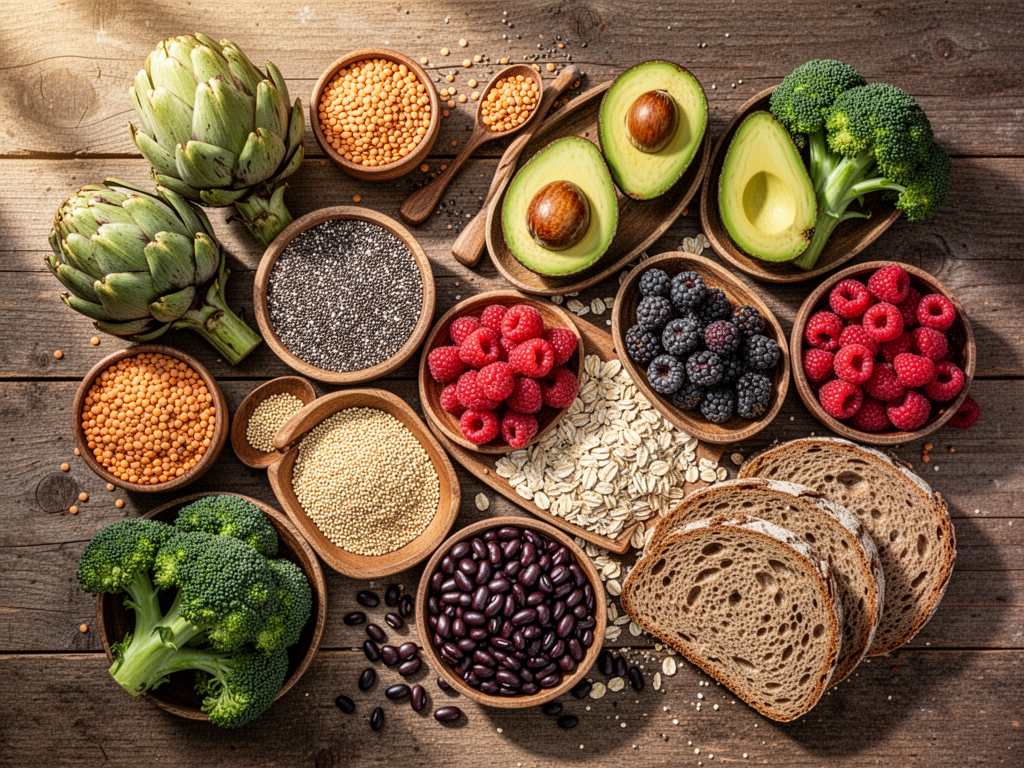
If there's one nutrient that consistently tops the list for gut health, it's fiber. Yet despite decades of research confirming its importance, the average American consumes only about 15 grams of fiber per day — barely half of the recommended 25–38 grams. This fiber gap isn't just a minor nutritional shortfall; it's starving the trillions of beneficial bacteria in your gut that depend on fiber to survive and thrive.
In this comprehensive guide, we'll explore exactly how fiber feeds your microbiome, the different types of fiber your gut bacteria need, and provide a practical roadmap for dramatically improving your gut health through fiber-rich foods.
Why Fiber Is the #1 Nutrient for Gut Health
Your gut microbiome is home to roughly 38 trillion bacteria — and the single biggest factor determining whether those bacteria help or harm you is what you feed them. Research published in the journal Cell Host & Microbe has shown that dietary fiber is the primary fuel source for beneficial gut bacteria. When these bacteria ferment fiber, they produce short-chain fatty acids (SCFAs) like butyrate, propionate, and acetate — compounds that are absolutely essential for gut barrier integrity, immune function, and even mental health.
Without adequate fiber, your gut bacteria literally begin to starve. Studies have demonstrated that a low-fiber diet causes gut bacteria to start consuming the protective mucus lining of your intestinal wall, potentially leading to increased intestinal permeability — commonly known as leaky gut.
Soluble vs. Insoluble Fiber: What Each Does for Your Gut
Not all fiber is created equal, and understanding the difference between the two main types can help you optimize your gut health strategy.
Soluble fiber dissolves in water to form a gel-like substance. This type of fiber is the primary food source for your gut bacteria and is fermented in the large intestine to produce those vital short-chain fatty acids. Excellent sources include oats, barley, legumes, chia seeds, flaxseeds, apples, and citrus fruits.
Insoluble fiber does not dissolve in water. It adds bulk to your stool and helps food move through your digestive system more efficiently. Think of it as a natural broom that sweeps through your intestines. Good sources include whole wheat, brown rice, nuts, seeds, and the skins of fruits and vegetables.
For optimal gut health, research suggests you need both types. A balanced intake ensures your gut bacteria are well-fed while your digestive system moves waste efficiently.
The 30-Plant Challenge: Transform Your Microbiome in One Week
One of the most exciting findings in recent microbiome research comes from the American Gut Project, which studied over 10,000 participants. The study found that people who ate 30 or more different plant foods per week had significantly more diverse gut microbiomes than those who ate fewer than 10 — regardless of whether they identified as vegetarian, vegan, or omnivore.
The 30-plant challenge is simple: aim to eat 30 different plant foods every week. This includes fruits, vegetables, whole grains, legumes, nuts, seeds, herbs, and spices. Each unique plant counts once per week, so variety is the goal.
Here's a sample tracker to get you started:
- Fruits (aim for 5–7): Blueberries, bananas, apples, raspberries, kiwi, mango, oranges
- Vegetables (aim for 8–10): Broccoli, spinach, sweet potato, garlic, onion, carrots, bell peppers, zucchini, cauliflower, kale
- Grains (aim for 3–4): Oats, quinoa, brown rice, whole wheat bread
- Legumes (aim for 3–4): Black beans, lentils, chickpeas, edamame
- Nuts & Seeds (aim for 4–5): Almonds, walnuts, chia seeds, flaxseeds, pumpkin seeds
- Herbs & Spices (aim for 3–5): Turmeric, ginger, basil, cinnamon, cumin
Top 20 High-Fiber Foods Ranked by Gut Health Impact
While total fiber content matters, some foods are particularly powerful for gut health because they contain specific types of prebiotic fiber that beneficial bacteria prefer. Here are the top 20, ranked by their overall gut health impact:
- Artichokes — 10.3g fiber per medium artichoke (rich in inulin, a potent prebiotic)
- Lentils — 15.6g per cup cooked (resistant starch + soluble fiber)
- Black beans — 15g per cup cooked (exceptional resistant starch content)
- Chia seeds — 10g per ounce (nearly all soluble fiber)
- Avocado — 10g per avocado (unique combination of soluble fiber + healthy fats)
- Oats — 8g per cup cooked (beta-glucan, a powerful prebiotic)
- Raspberries — 8g per cup (polyphenols + fiber synergy)
- Chickpeas — 12.5g per cup cooked (excellent resistant starch)
- Broccoli — 5.1g per cup (sulforaphane + fiber combination)
- Flaxseeds — 8g per ounce (lignans + soluble fiber)
- Sweet potatoes — 6.6g per medium (resistant starch when cooled)
- Pears — 5.5g per medium (pectin, a gel-forming prebiotic)
- Quinoa — 5.2g per cup cooked (complete protein + fiber)
- Almonds — 3.5g per ounce (prebiotic effect on Bifidobacteria)
- Brussels sprouts — 4.1g per cup (glucosinolates + fiber)
- Garlic — 2.1g per ounce (concentrated inulin and FOS prebiotics)
- Bananas — 3.1g per medium (resistant starch in green bananas)
- Barley — 6g per cup cooked (beta-glucan prebiotic)
- Asparagus — 3.6g per cup (inulin-rich prebiotic)
- Whole wheat pasta — 6.3g per cup cooked (arabinoxylan prebiotic fiber)
How Fiber Produces Short-Chain Fatty Acids (and Why They Matter)
When your gut bacteria ferment dietary fiber, they produce three primary short-chain fatty acids, each with distinct benefits:
Butyrate is the preferred energy source for the cells lining your colon (colonocytes). It strengthens the gut barrier, reduces inflammation, and has been shown in research to have anti-cancer properties. Butyrate is primarily produced from resistant starch and soluble fiber.
Propionate travels to the liver where it helps regulate cholesterol production and gluconeogenesis (the creation of new glucose). Research suggests propionate plays a key role in appetite regulation and metabolic health.
Acetate is the most abundant SCFA and enters the bloodstream where it influences fat metabolism, appetite signaling, and immune function throughout the body.
Together, these SCFAs lower the pH of your colon (creating an environment hostile to pathogenic bacteria), feed the cells of your intestinal lining, and communicate with your immune system to maintain balanced inflammatory responses.
How Much Fiber You Really Need (and How to Increase Without Bloating)
The general recommendation is 25 grams per day for women and 38 grams for men. However, many gut health researchers suggest that optimal microbiome diversity may require even more — closer to 40–50 grams daily, which is typical of traditional diets in cultures with the healthiest gut microbiomes.
The key rule: increase slowly. Adding too much fiber too quickly is the #1 mistake people make, leading to gas, bloating, and discomfort that causes them to quit. Follow these guidelines:
- Week 1: Add 5 grams per day above your current intake
- Week 2: Add another 5 grams
- Week 3–4: Continue increasing by 5 grams every 5–7 days until you reach your target
- Water: Increase water intake by 1–2 glasses per day for every 10 grams of fiber added
- Cook your vegetables: Cooked fiber is generally easier to digest than raw when you're ramping up
A 7-Day High-Fiber Meal Plan for Gut Health
Here's a practical 7-day framework to hit 35+ grams of fiber daily:
Day 1: Overnight oats with chia seeds and berries (breakfast), lentil soup with whole grain bread (lunch), salmon with roasted broccoli and quinoa (dinner)
Day 2: Smoothie with flaxseeds, banana, and spinach (breakfast), black bean burrito bowl (lunch), chicken stir-fry with mixed vegetables and brown rice (dinner)
Day 3: Whole grain toast with avocado and seeds (breakfast), chickpea salad with mixed greens (lunch), sweet potato and black bean chili (dinner)
Day 4: Greek yogurt parfait with granola and raspberries (breakfast), whole wheat pasta with roasted vegetables (lunch), grilled fish with asparagus and barley (dinner)
Day 5: Oat pancakes with blueberries (breakfast), lentil and vegetable curry (lunch), turkey lettuce wraps with quinoa (dinner)
Day 6: Chia pudding with mango and almonds (breakfast), minestrone soup with beans (lunch), stuffed bell peppers with brown rice and vegetables (dinner)
Day 7: Whole grain waffles with pear slices and walnuts (breakfast), Mediterranean bowl with hummus and tabbouleh (lunch), roasted chicken with Brussels sprouts and sweet potato (dinner)
Common Mistakes That Sabotage Your Fiber Goals
Going too fast: As mentioned above, ramping up fiber intake too quickly causes uncomfortable gas and bloating. Your gut bacteria need time to adjust and expand their populations to handle the increased workload.
Not drinking enough water: Fiber absorbs water. Without adequate hydration, high-fiber diets can actually cause constipation — the opposite of what most people are trying to achieve.
Relying on fiber supplements: While supplements like psyllium husk have their place, they lack the diverse array of phytonutrients, polyphenols, and different fiber types found in whole foods. Research consistently shows that fiber from food produces better microbiome outcomes than supplemental fiber alone.
Eating the same fiber foods every day: Diversity is critical. Eating the same oatmeal and apple every day feeds only a narrow range of bacteria. The 30-plant challenge exists precisely to encourage the variety your microbiome craves.
The Bottom Line
Fiber is arguably the single most impactful dietary change you can make for your gut health. By gradually increasing your fiber intake, diversifying your plant food sources, and aiming for the 30-plant-per-week challenge, you can dramatically reshape your microbiome composition in as little as two weeks. Start slow, stay consistent, and let your gut bacteria do the rest.
Disclaimer: This article is for informational purposes only and does not constitute medical advice. Always consult with a healthcare professional before making significant changes to your diet, especially if you have existing digestive conditions.