The Gut Health and Weight Loss Connection: How Your Microbiome Controls Your Metabolism
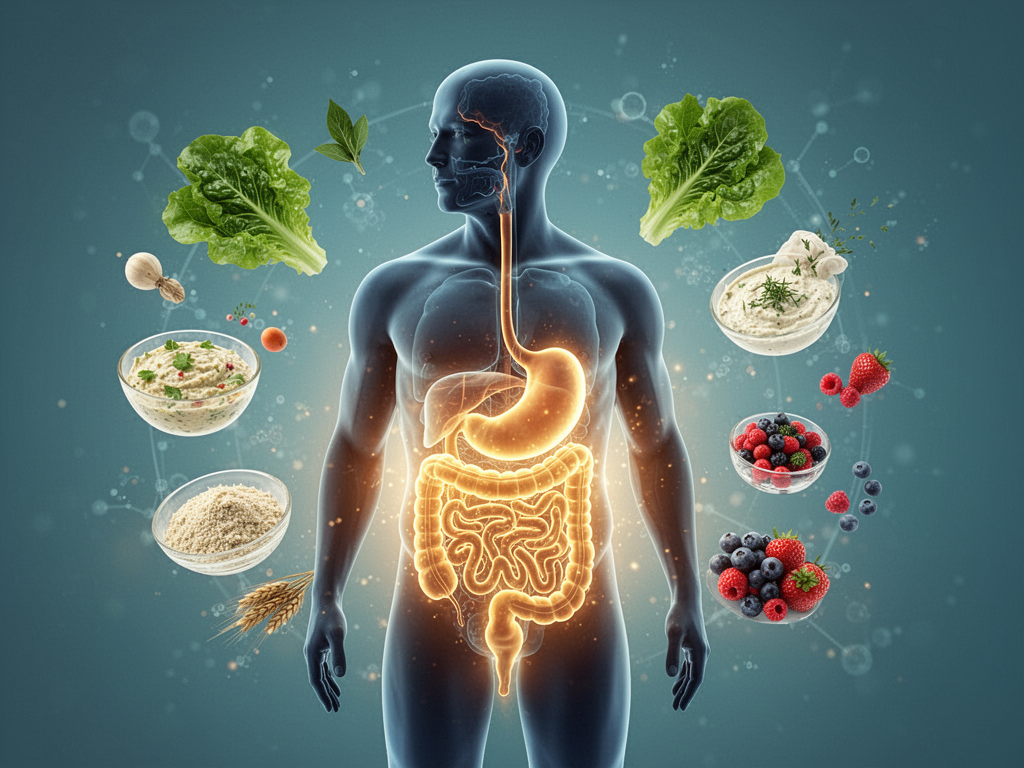
What if the reason your last diet failed had nothing to do with willpower — and everything to do with the bacteria living in your gut? Emerging research is revealing that the trillions of microorganisms in your digestive system play a far more significant role in weight management than anyone previously imagined. From how many calories your body extracts from food to whether you feel hungry or satisfied after a meal, your gut microbiome is pulling the strings behind the scenes.
In this article, we'll dive deep into the science connecting gut health to weight loss and metabolism, and provide actionable strategies to optimize your microbiome for healthy, sustainable weight management.
Why Two People Can Eat the Same Meal and Gain Different Amounts of Weight
You've probably noticed this frustrating phenomenon: you and a friend eat the exact same meal, yet one of you gains weight and the other doesn't. For years, this was attributed to vague notions of "fast" or "slow" metabolisms. But groundbreaking research from the Weizmann Institute of Science has shown that individual blood sugar responses to identical foods vary dramatically — and your gut bacteria are a major reason why.
The composition of your gut microbiome determines how efficiently your body breaks down and absorbs nutrients from food. Some bacterial communities are simply better at extracting calories from food than others. A landmark study published in Nature found that transplanting gut bacteria from obese mice into germ-free mice caused the recipients to gain significantly more fat — even when eating the same amount of food as mice receiving bacteria from lean donors.
The "Obese Microbiome" vs. the "Lean Microbiome"
Research has identified consistent differences between the gut bacteria of lean and overweight individuals. Studies show that people with obesity tend to have:
- Lower bacterial diversity — fewer different species of bacteria overall
- Higher Firmicutes-to-Bacteroidetes ratio — Firmicutes bacteria are particularly efficient at extracting calories from food
- Reduced populations of Akkermansia muciniphila — a bacteria strongly associated with lean body mass and metabolic health
- Lower short-chain fatty acid production — particularly butyrate, which helps regulate fat storage and energy expenditure
Importantly, these differences are not permanent. Research published in Gut journal has demonstrated that dietary changes can begin shifting microbiome composition in as little as 24–48 hours, with more substantial changes occurring over 2–4 weeks of consistent dietary modification.
GLP-1 and Your Gut: The Natural Appetite Hormone Your Bacteria Help Produce
GLP-1 (glucagon-like peptide-1) has become one of the most talked-about hormones in health, largely due to the popularity of GLP-1 receptor agonist medications. But here's what many people don't realize: your body produces GLP-1 naturally, and your gut bacteria play a direct role in stimulating its release.
GLP-1 is produced by L-cells in your intestinal lining and has several powerful effects:
- Slows gastric emptying, making you feel full longer after meals
- Signals the brain to reduce appetite
- Stimulates insulin secretion, helping regulate blood sugar
- May promote fat oxidation (burning fat for energy)
When gut bacteria ferment dietary fiber and produce short-chain fatty acids (particularly butyrate and propionate), these SCFAs directly stimulate L-cells to release GLP-1. This means that feeding your gut bacteria a fiber-rich diet naturally boosts your body's own GLP-1 production — no medication required.
Foods that have been shown to stimulate natural GLP-1 production include:
- Legumes (lentils, chickpeas, black beans)
- Whole grains (oats, barley, quinoa)
- Fermented foods (yogurt, kefir, sauerkraut)
- Vegetables rich in prebiotic fiber (artichokes, garlic, onions, asparagus)
- Nuts and seeds (almonds, walnuts, flaxseeds)
Gut Bacteria and Insulin Resistance: The Inflammation Connection
Insulin resistance — when your cells stop responding efficiently to insulin — is a central driver of weight gain and metabolic disorders. And research is increasingly pointing to gut health as a root cause.
Here's the mechanism: when your gut barrier becomes compromised (a condition associated with low-fiber diets and poor bacterial diversity), bacterial compounds called lipopolysaccharides (LPS) can leak into the bloodstream. This triggers a chronic, low-grade inflammatory response throughout the body — a condition researchers call "metabolic endotoxemia."
This chronic inflammation directly interferes with insulin signaling in your cells, leading to insulin resistance. Over time, insulin resistance promotes fat storage (especially visceral belly fat), makes it harder to lose weight, and increases the risk of type 2 diabetes.
The good news? Studies have shown that improving gut barrier function through dietary changes can reduce systemic inflammation and improve insulin sensitivity within weeks.
The Gut-Appetite Axis: How Microbes Influence Hunger Hormones
Beyond GLP-1, your gut bacteria influence several other hormones that control hunger and satiety:
Ghrelin (the "hunger hormone"): Produced primarily in the stomach, ghrelin signals your brain that it's time to eat. Research suggests that certain gut bacterial profiles can increase ghrelin production, leading to persistent hunger and overeating.
Leptin (the "satiety hormone"): Produced by fat cells, leptin tells your brain you've had enough to eat. Gut-derived inflammation can cause leptin resistance — a condition where your brain stops "hearing" leptin's signal, so you continue feeling hungry despite having eaten enough.
PYY (peptide YY): Released by cells in the intestine after eating, PYY reduces appetite and slows digestion. Like GLP-1, PYY production is stimulated by short-chain fatty acids from bacterial fiber fermentation.
In essence, a healthy gut microbiome acts as a natural appetite regulation system — reducing hunger, increasing satiety, and helping you eat the right amount without constant willpower battles.
8 Diet Strategies to Optimize Your Gut for Healthy Weight Management
Based on the current research, here are eight evidence-based strategies to reshape your gut microbiome for better metabolic health:
- Prioritize fiber above all else. Aim for 30–40 grams of diverse plant fiber daily. This is the single most impactful change you can make for your gut bacteria and natural GLP-1 production.
- Eat fermented foods daily. Yogurt, kefir, sauerkraut, kimchi, and miso introduce beneficial bacteria and have been shown to reduce inflammatory markers in clinical trials.
- Include resistant starch. Cooked-then-cooled potatoes, rice, and legumes contain resistant starch that powerfully feeds beneficial bacteria and boosts butyrate production.
- Eat polyphenol-rich foods. Berries, dark chocolate, green tea, olive oil, and red grapes contain polyphenols that selectively promote beneficial bacteria like Akkermansia muciniphila.
- Reduce ultra-processed foods. Emulsifiers, artificial sweeteners, and additives in processed foods have been shown to damage the gut barrier and reduce bacterial diversity.
- Don't skip meals or severely restrict calories. Extreme calorie restriction reduces gut bacterial diversity and can shift your microbiome toward a composition that extracts more calories from food — making future weight gain more likely.
- Eat the rainbow. Different colored plants contain different prebiotic compounds that feed different bacteria. Aim for 30+ plant species per week for maximum diversity.
- Consider a targeted probiotic. Look for strains with clinical evidence for metabolic health, including Lactobacillus gasseri, Akkermansia muciniphila, and Bifidobacterium lactis.
Foods That Promote a "Lean" Microbiome
Based on research into the gut bacteria of lean, metabolically healthy individuals, these foods are particularly powerful for promoting a weight-friendly microbiome:
- Green tea and matcha — catechins promote Akkermansia and reduce Firmicutes
- Extra virgin olive oil — polyphenols increase Bifidobacteria and Lactobacillus
- Blueberries and cranberries — anthocyanins selectively feed beneficial bacteria
- Walnuts — shown in clinical trials to increase butyrate-producing bacteria
- Oats and barley — beta-glucan fiber powerfully stimulates SCFA production
- Kimchi and sauerkraut — provide living Lactobacillus bacteria plus prebiotic fiber
- Legumes — the combination of resistant starch, soluble fiber, and protein is uniquely beneficial for metabolic gut bacteria
Why Crash Diets Destroy Gut Health (and Make Long-Term Weight Management Harder)
If you've ever lost weight quickly only to regain it (and then some), your gut microbiome may be partly to blame. Research published in Nature has shown that rapid weight loss through extreme dieting dramatically reduces gut bacterial diversity. Even after returning to normal eating, the microbiome can take months — sometimes over a year — to recover.
During this recovery period, the depleted microbiome is especially efficient at extracting calories from food and storing them as fat. Researchers at the Weizmann Institute call this the "microbiome memory" effect: your gut bacteria "remember" the period of restriction and respond by maximizing calorie absorption when food becomes available again.
This is one reason why yo-yo dieting becomes progressively harder over time. Each cycle of restriction and regain further damages microbiome diversity, making the next weight loss attempt more difficult.
The solution? Gradual, sustainable dietary changes that feed your gut bacteria rather than starve them. A fiber-rich, whole-food diet that maintains or improves microbiome diversity will produce slower but far more sustainable weight loss — and protect you from the rebound effect.
The Bottom Line
The connection between gut health and weight management is no longer theoretical — it's one of the most active and promising areas of metabolic research. By shifting your focus from calorie counting to microbiome nourishment, you can work with your body's natural systems rather than against them. Feed your gut bacteria well, and they'll reward you with better appetite regulation, improved insulin sensitivity, enhanced natural GLP-1 production, and a metabolism that supports healthy weight management for the long term.
Disclaimer: This article is for informational purposes only and does not constitute medical advice. Always consult with a healthcare professional before making significant changes to your diet or weight management approach.